Anthony Perkins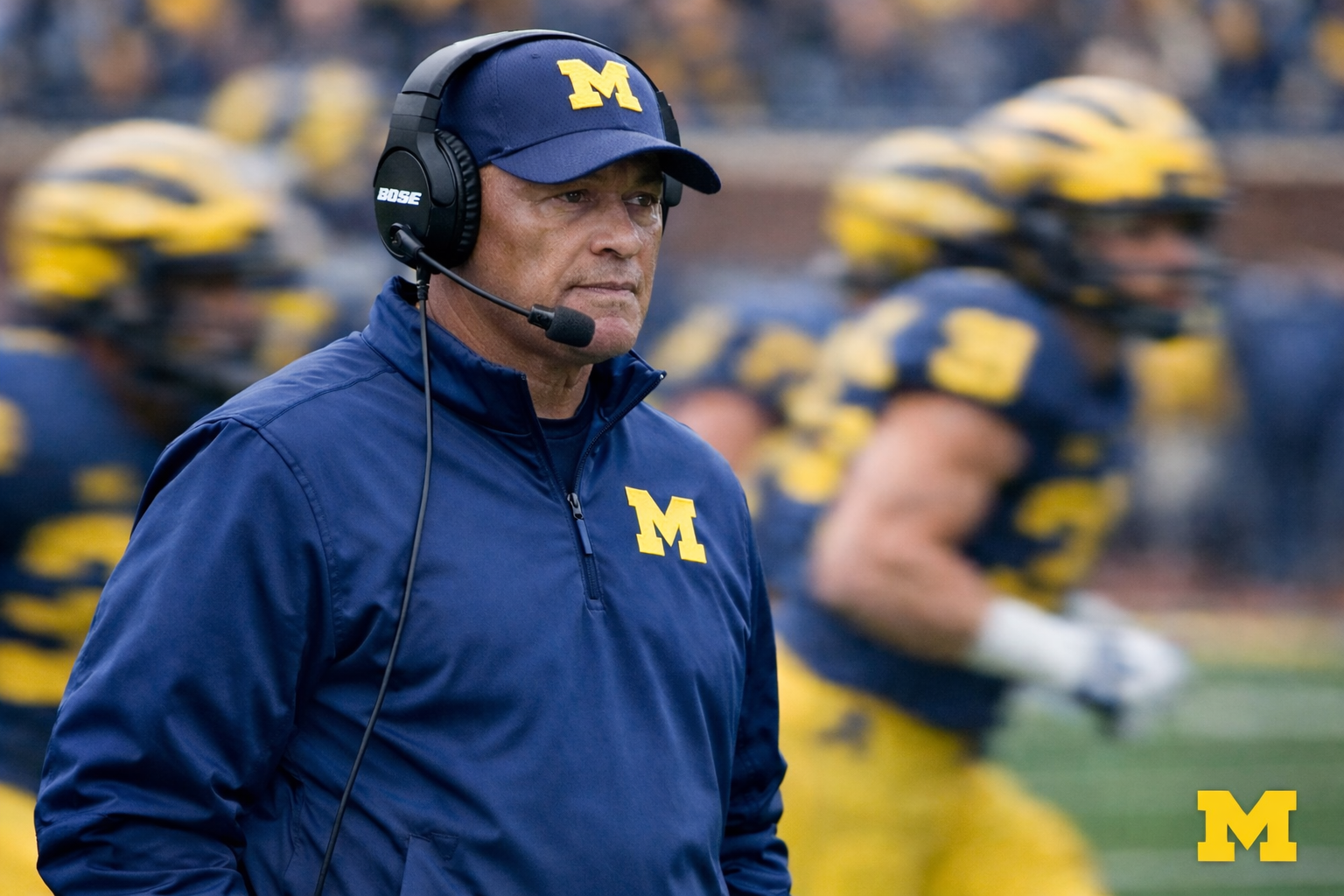
Kyle Whittingham at Michigan: A Calculated Gamble on Stability
Michigan football made waves on December 26, 2025, by hiring Kyle Whittingham as its next head coach. The 66-year-old Utah legend brings an impressive résumé to Ann Arbor: 176 wins over 21 seasons, multiple conference championships, and an 11-6 bowl record that ties him for the most postseason victories among active coaches. But in an era obsessed with young offensive masterminds and flashy recruiters, is an aging defensive-minded coach the right choice for a program desperate to reclaim its place among college football’s elite?
The Case for Whittingham: Consistency in Chaos
Michigan’s recent history reads like a soap opera. Jim Harbaugh’s tenure ended in controversy with a sign-stealing scandal and a hasty departure to the NFL. His successor, Sherrone Moore, lasted just two disastrous seasons before he went off the deep end.. In the span of two a half years, Michigan went from national champions to a program in crisis, badly in need of an adult in the room.
Enter Kyle Whittingham. His 21-year run at Utah represents something increasingly rare in modern college football: genuine loyalty and sustained excellence. While peers hopped from job to job chasing bigger paychecks, Whittingham built Utah into a perennial top-25 program and turned down opportunities to leave. That kind of institutional knowledge and stability is exactly what Michigan needs right now.
Whittingham’s reputation is spotless. There are no scandals, no NCAA investigations, no toxic locker rooms. After the chaos of the Harbaugh and Moore eras, that clean slate matters. He builds strong team cultures where players develop both on and off the field. His track record suggests he’ll restore respectability to a program that desperately needs it.
What Michigan Can Expect on the Field
Don’t mistake Whittingham for a dinosaur clinging to outdated schemes. While he built his reputation on physical, defense-first football, Utah’s offense exploded in 2025 under coordinator Jason Beck, averaging 41.1 points and 478.6 yards per game. Beck is expected to follow Whittingham to Michigan, bringing that offensive firepower with him.
The blueprint is clear: dominant defensive line play, physical running game, and an offense that can score when it matters. It’s not the spread-option revolution, but it’s proven, sustainable football that wins 9-10 games a year and competes for conference titles.
Whittingham’s bowl success is particularly noteworthy. His 11-6 postseason record demonstrates an ability to prepare teams for big moments and win games when it counts. Michigan fans tired of embarrassing bowl performances will appreciate a coach who treats every game like it matters.
The Elephant in the Room: Age and Timeline
Let’s address the obvious concern: Whittingham is 66 years old. This isn’t a 15-year hire. Realistically, Michigan is looking at a 3-5 year window, and possibly shorter if health becomes a factor. For a program with championship aspirations, is that enough time?
Perhaps counterintuitively, that shorter timeline might be exactly what Michigan needs. Whittingham can stabilize the roster, clean up the culture, return the program to consistent 9-10 win seasons, and then hand the keys to the next coach with the program in far better shape than he found it. Think of him as a bridge hire—but a really, really good bridge hire.
The recruiting question looms large. Can a 66-year-old coach connect with 17-year-old prospects? Whittingham’s staff will be crucial here, and early signs are positive. Five-star quarterback Bryce Underwood, the crown jewel of Michigan’s 2024 recruiting class, has already committed to staying despite the coaching change. That’s a massive vote of confidence and gives Whittingham a franchise quarterback to build around.
The Brady Hoke Warning
Michigan fans have been burned before. Brady Hoke arrived in 2011 as the “Michigan Man” who would restore the program to glory after the Rich Rodriguez experiment failed. He started 11-2, and it looked perfect. Then reality set in: poor player development, embarrassing losses to rivals, and the infamous Shane Morris concussion incident that symbolized a program in decline.
But the Hoke comparison isn’t quite fair. Hoke was hired on emotion and nostalgia with a thin résumé—a few successful years at Ball State and San Diego State. Whittingham brings 21 years of sustained excellence at the highest level of college football. He’s navigated conference realignment, the transfer portal era, and NIL changes while continuing to win. His track record dwarfs what Hoke accomplished before arriving in Ann Arbor.
The risk with Whittingham isn’t catastrophic failure. It’s that he might be merely good—winning 8-9 games annually without breaking through to championship contention before retirement. But given where Michigan sits right now, good and stable sounds infinitely better than the chaos of the recent past.
The Transfer Portal Challenge
The January 2 transfer portal window presents Whittingham’s first major test. After a turbulent season and coaching change, roster attrition is inevitable. Key players will explore their options, and Michigan could lose impact starters to programs offering more immediate championship opportunities.
But Whittingham has an advantage: the Michigan brand still matters. The winged helmet, the 100,000-seat Big House, the history and tradition—kids grow up dreaming of playing for Michigan. Even after a difficult year, that mystique doesn’t evaporate overnight. Combined with Whittingham’s reputation for player development and his proven ability to build NFL-caliber talent, Michigan should be able to retain enough core pieces while actively rebuilding through the portal themselves.
Whittingham knows how to evaluate talent and construct rosters. He did it at Utah with far fewer resources than he’ll have at Michigan. If he can keep his key recruiters while integrating his trusted Utah assistants, the transition should be manageable.
The Realistic Path Forward
Here’s what Michigan fans should expect:
Year 1 (2026): Growing pains as Whittingham installs his system and navigates roster turnover. Expect 7-9 wins as the culture begins to shift. Bowl game appearance, likely a win given his postseason track record.
Year 2 (2027): The roster is now Whittingham’s. Defense should be elite, offense clicking under Beck’s system with Underwood developing into a star. 9-10 wins, competitive in the Big Ten race.
Year 3 (2028): Championship window opens if everything breaks right. Underwood is a junior, roster is stocked with developed talent, culture is established. Legitimate Big Ten title contender.
Year 4+: Either Whittingham rides off into the sunset after restoring the program, or he stays one more year if they’re truly competing for national titles.
The Verdict: Calculated Risk Worth Taking
Kyle Whittingham isn’t a sexy hire. He’s not the hot young coordinator everyone is buzzing about. He won’t revolutionize social media recruiting or promise immediate national championships. But after years of chaos, scandal, and instability, maybe Michigan doesn’t need sexy. Maybe they need steady.
Whittingham represents institutional knowledge, proven success, and cultural stability. He’ll win games, develop players, and restore respectability to a program that desperately needs all three. If the ceiling is “really good but not elite,” well, Michigan would take really good right now over the alternative they’ve been living through.
The comparison to make isn’t Brady Hoke. It’s more like when a struggling corporation brings in an experienced CEO to right the ship before handing it off to the next generation. Whittingham is the perfect person for that role. He’ll fix what’s broken, instill discipline and culture, and position Michigan for sustained success once he’s gone.
For a program that’s been spinning its wheels, that sounds like exactly what the doctor ordered. The Michigan brand combined with Whittingham’s steady hand could be the formula that finally gets the Wolverines back on track. It’s not a guarantee of championships, but it’s a clear step in the right direction—and right now, that’s what matters most.


 Keegan Brekt
 Carter Stenberg